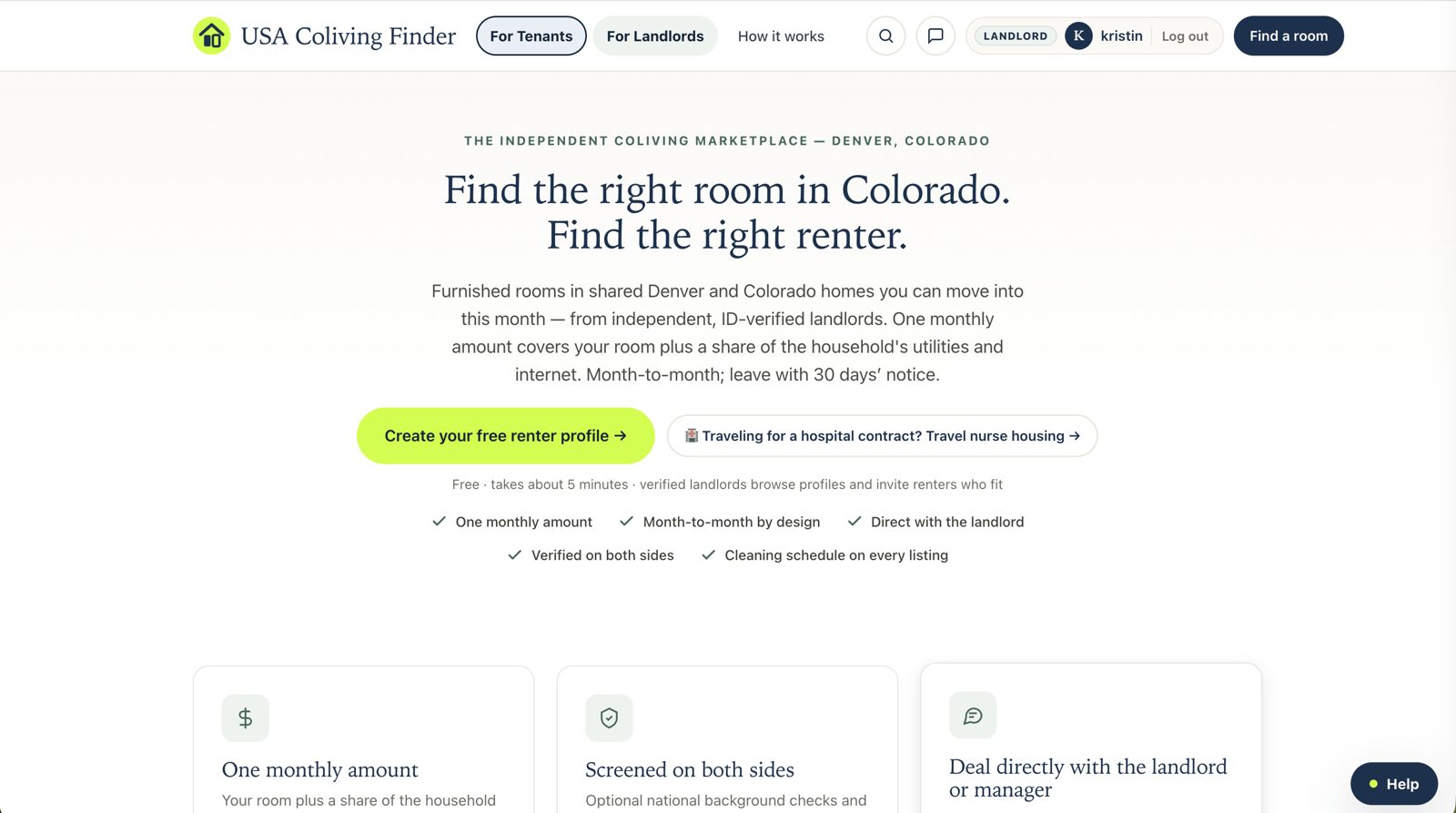
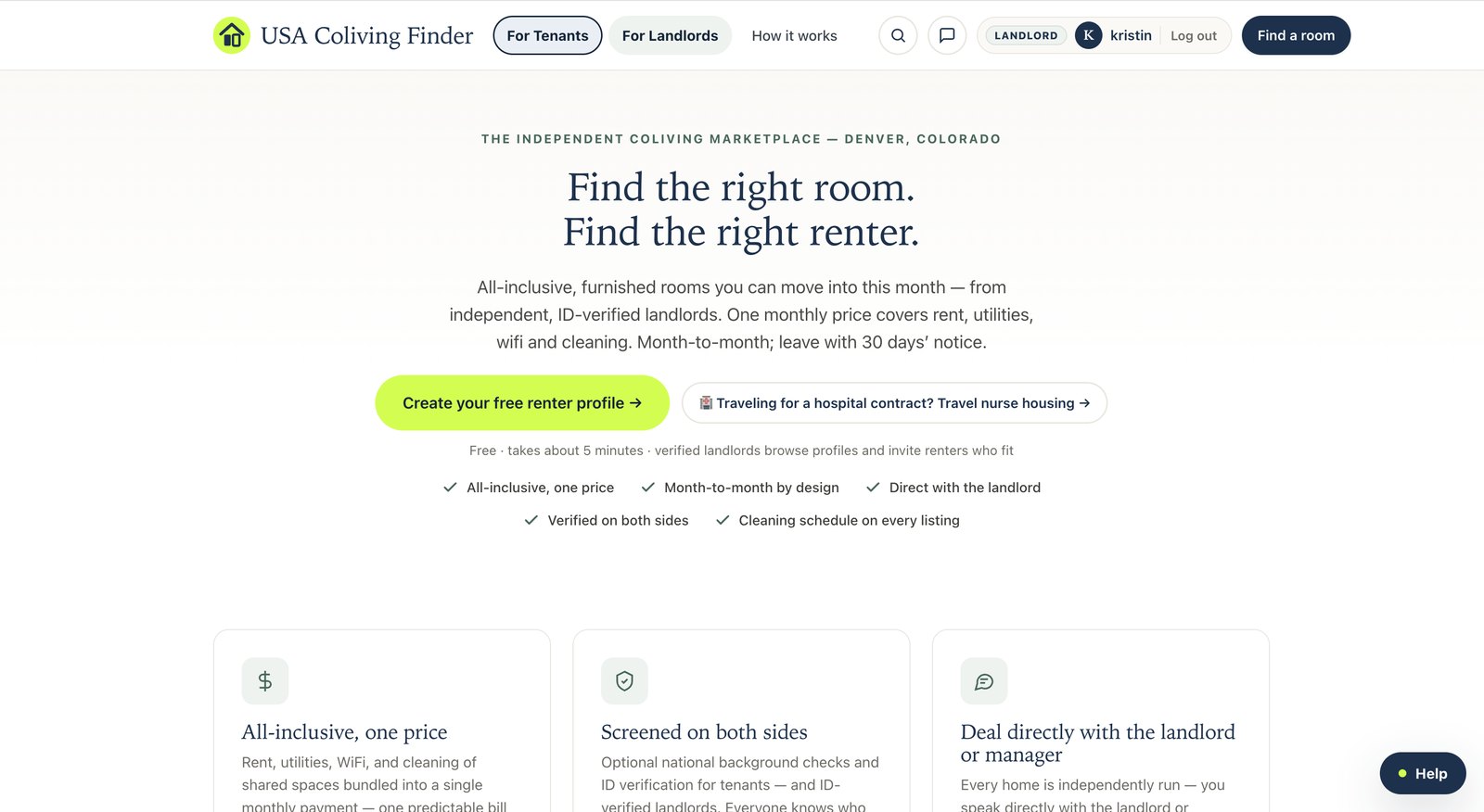
A trust-first coliving marketplace — one product for the whole country, launched and focused on Colorado first. Find the right room. Find the right renter.

Ten years of Denver Coliving proved that calm, all-inclusive coliving works — and that people everywhere want it. A marketplace is different: it needs enough homes and renters in one place. So the product is the same in every state, and the launch is focused on one. Colorado first.
One seven-room shared home, lived in for nearly a decade. The proof that calm, all-inclusive coliving works.
Launched and focused on Colorado first — the market I know best, where every decision gets tested before growing.
The same product and the same trust model in every new market.
How do you build a marketplace that feels simple to every user in any state, without the platform taking on what belongs to each owner? A renter in Denver and an owner in Atlanta should use exactly the same product — and trust it the same way.
Fifty versions of the product would be impossible to maintain and confusing for everyone. It had to be one experience, everywhere.
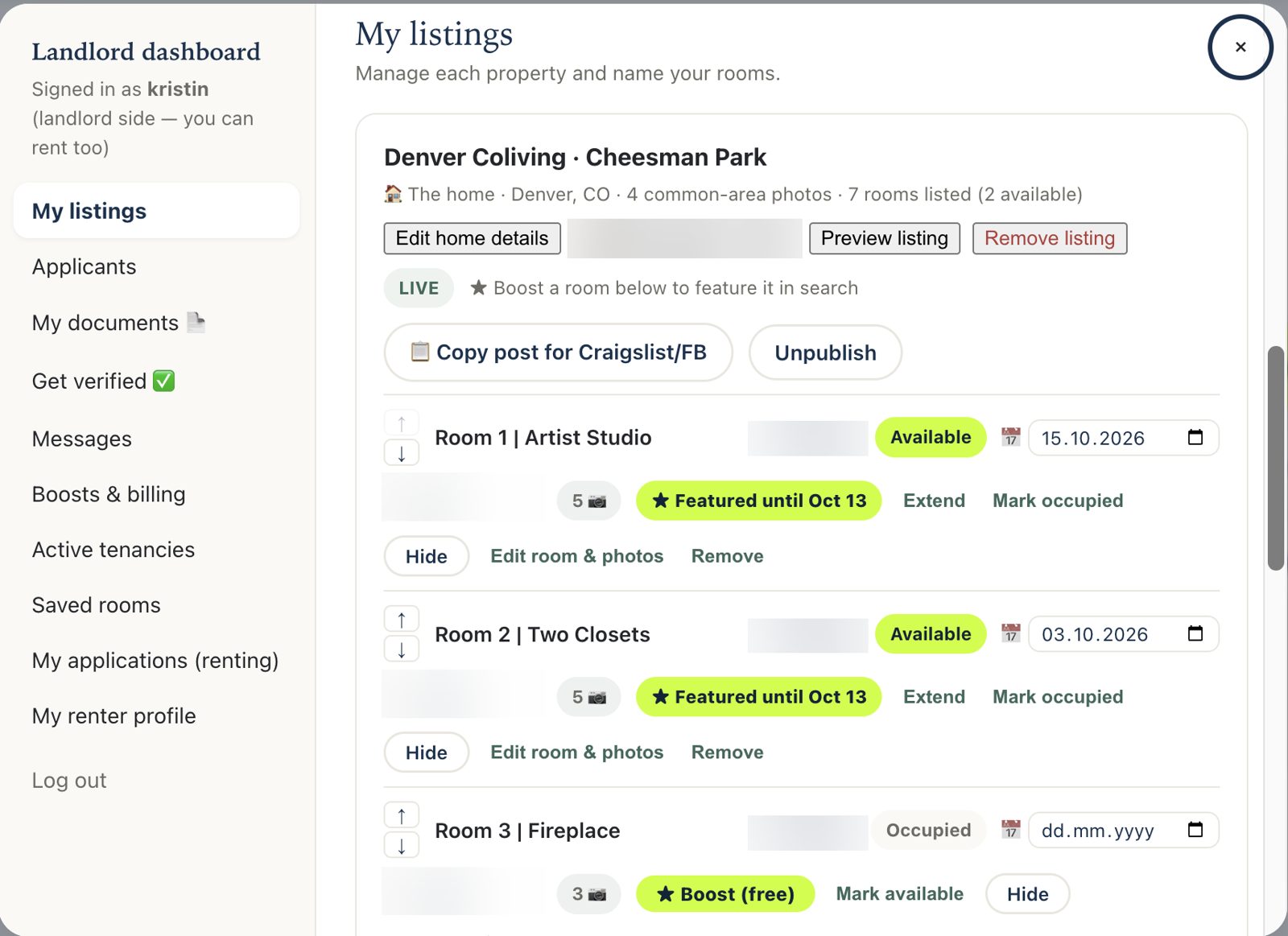
The platform doesn't hand out leases. Every owner uploads their own documents; the platform provides one application form.
A two-sided marketplace needs liquidity. Opening the whole country at once would spread it thin — so growth is built market by market, starting with Colorado.
Moving to a new city cross-country. Wants a furnished, all-inclusive room fast, with verified people — without learning a new city's rental scams first.
Owns or manages a coliving home somewhere in the U.S. Wants verified tenants and a clear process — without the hassle.
The defining move of this project: don't build 50 versions, and don't get in the middle of each owner's business. The platform does what a platform should — verify, connect, and keep pricing predictable — and leaves the documents with the people they belong to.
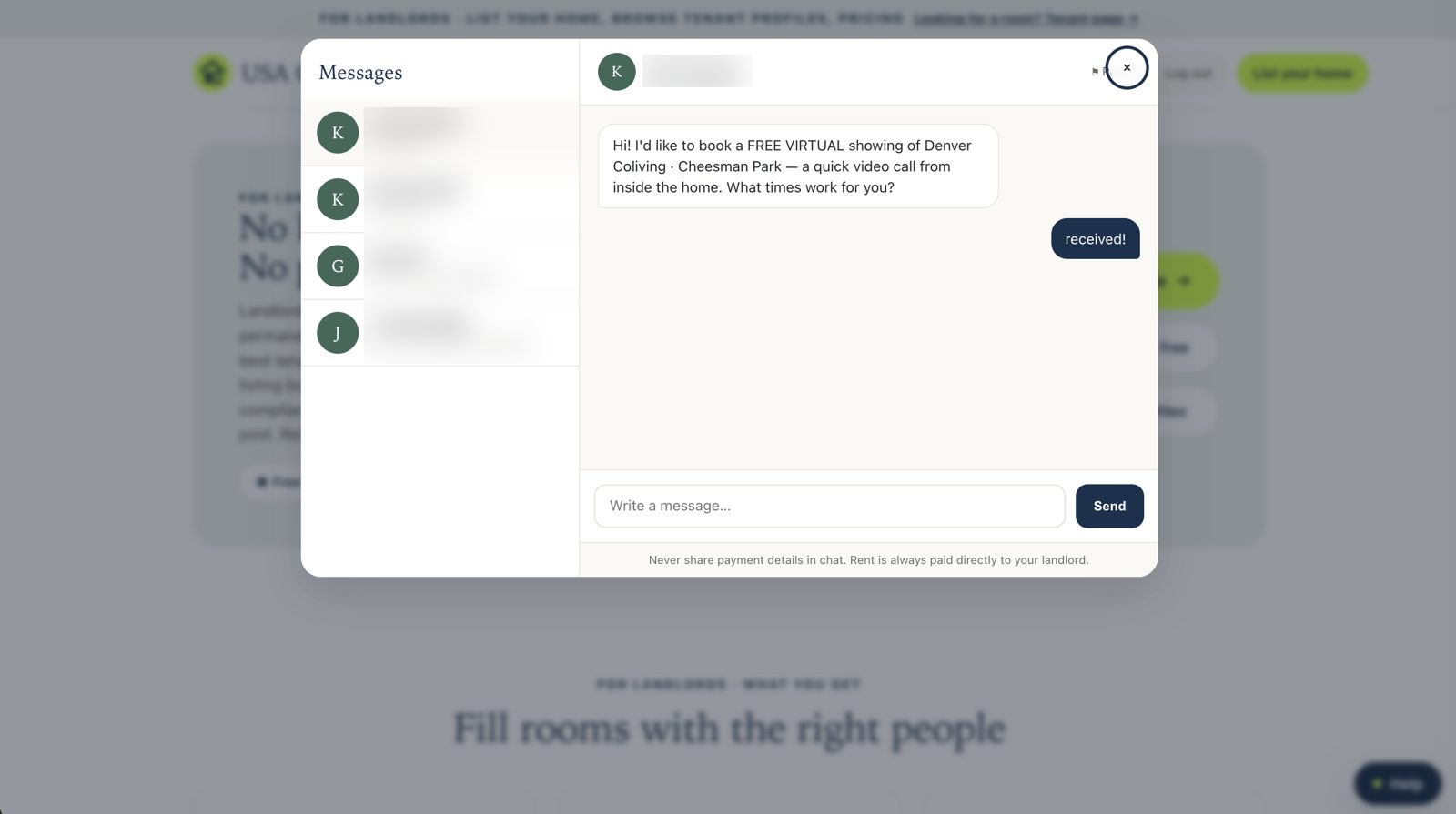
Identity verification on both sides, one application form, direct renter-to-owner messaging, and all-inclusive, month-to-month pricing.
Every owner uploads their own lease and house rules. The platform never hands out leases or steps between the two parties.
The result: one product that works the same in any state — and a platform that is honest about what it is.
The renter/owner split is the foundation; state is just a search filter, never a different version of the product.
By city, price, and move-in — anywhere in the U.S.
All-inclusive price, house rules, owner documents.
ID + background — the biggest "yes" signal.
Apply on the listing or talk to the host directly.
Prorated first month; 30-day notice ending month-end.
Listing a home is free.
Photos, pricing, house rules, and the owner's own paperwork.
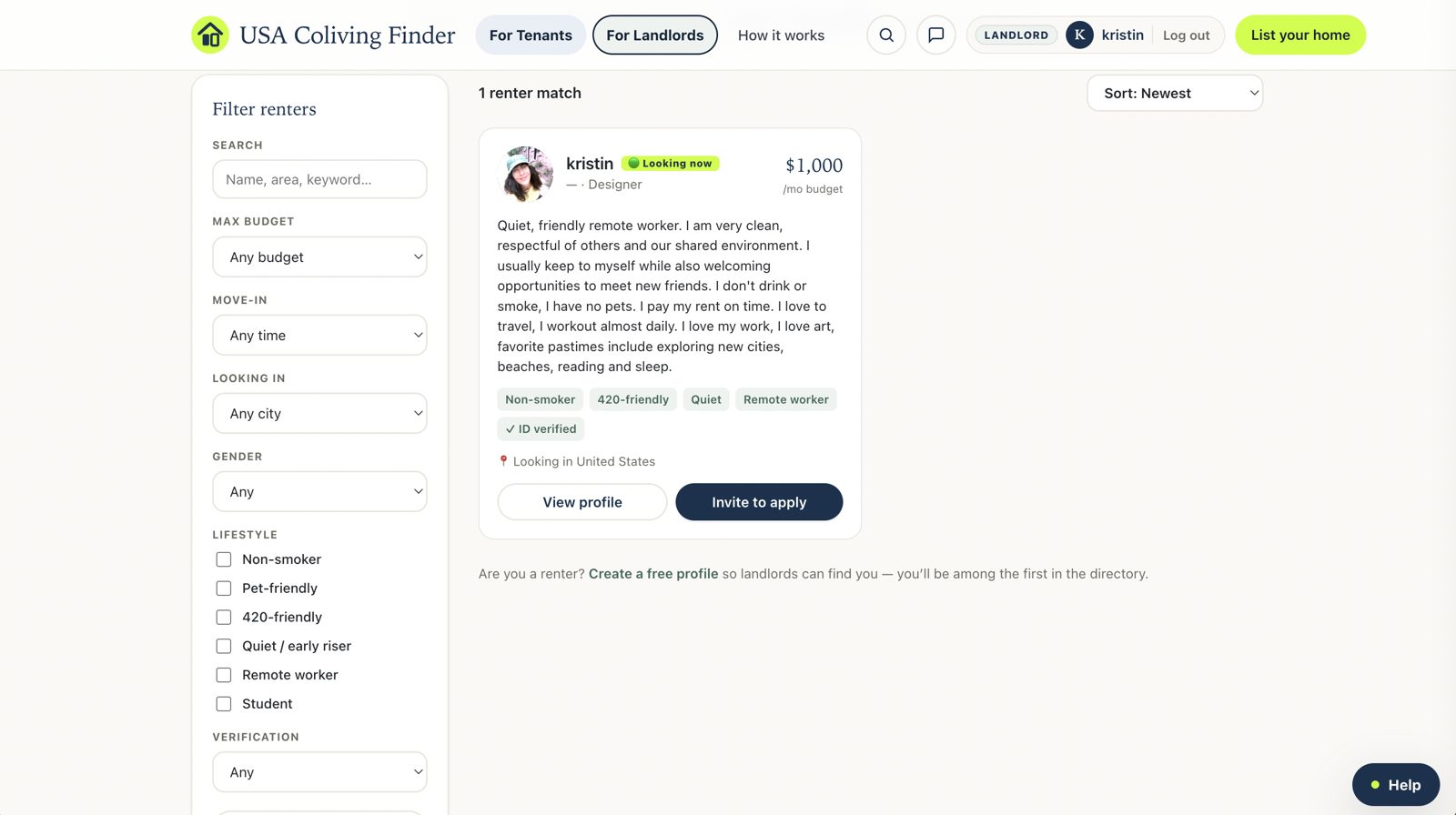
Verified applicants in; search renter profiles too.
First qualified, soonest move-in — keep gaps small.
Pay only once the site places your first tenant.
The move-in/move-out model was designed to be predictable for renters and vacancy-proof for hosts.
Move in after the 1st and you pay by the day. No surprise full month — trust built up front.
Tenancies end at month-end so rooms turn over cleanly for 1st-of-month move-ins.
Rooms fill as they open to cut costly gaps; hosts who want a tenant lined up early can accept advance reservations.
ID and background checks framed as the renter's fastest path to "yes" — not a hurdle.
USA Coliving Finder extends the Denver Coliving visual language into a full design system — tokens and components built once so the product shipped fast and stays consistent as it grows.
Pill chips, rounded cards (~16px), two-pane layouts (messaging, dashboards, tenant search), verification badges, primary/lime/ghost buttons — Georgia headings, system-sans body, fluid clamp() sizing.
State filter, owner document upload, the standard application, prorated-pricing explainers, and the pricing page.
The Denver Coliving wordmark, extended to a national identity — same Georgia type and lime accent, so the family reads as one brand (Denver Coliving → USA Coliving Finder).
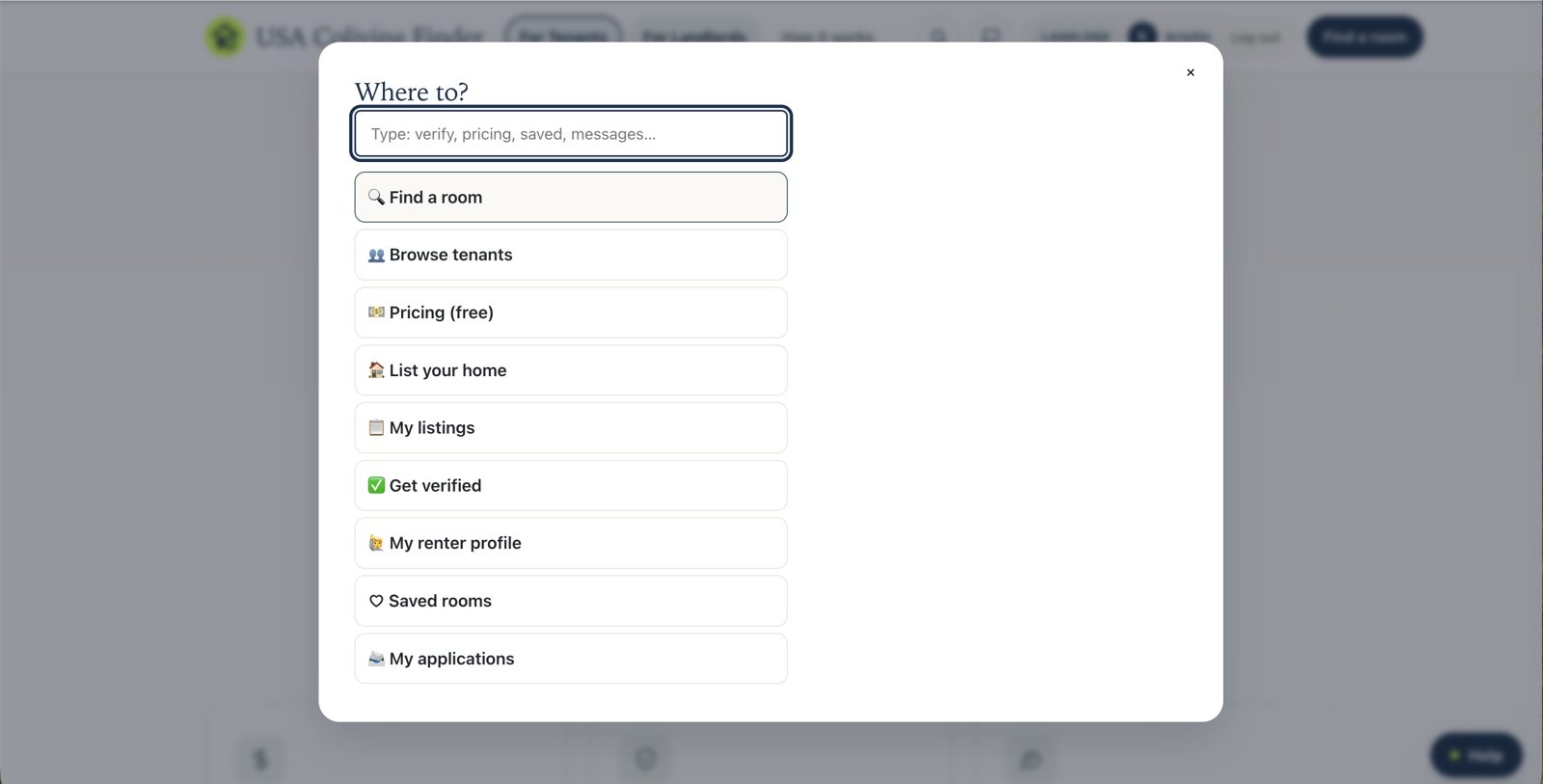
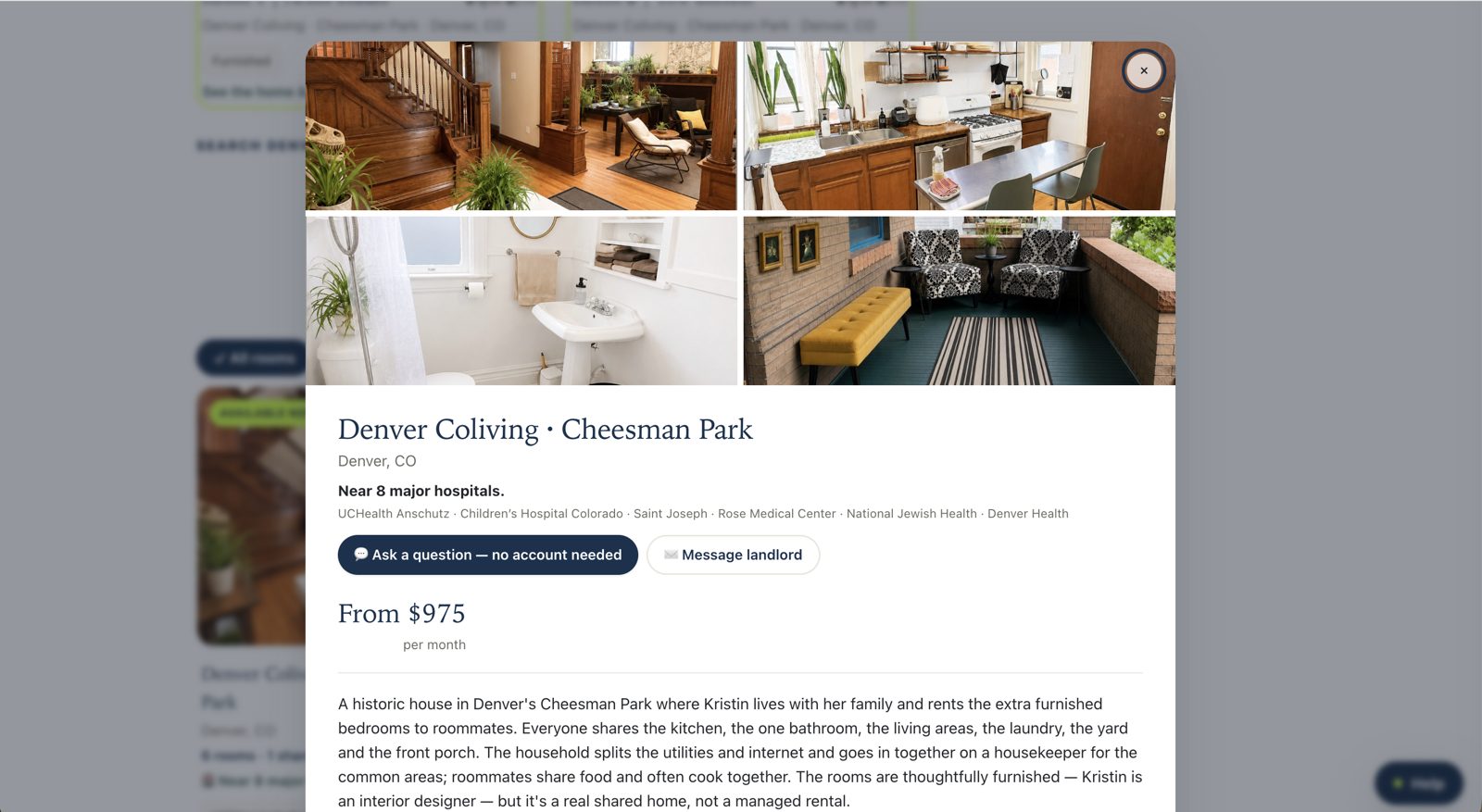
Six screens from the live front-end, each with the design decision behind it. See them in context at usacolivingfinder.com.


Text/background pairs meet AA; lime is an accent on navy, never small text on white.
First-class filters for accessible homes, LGBTQ-welcoming, students, and pet-friendly — inclusion designed into search, not bolted on.
Every control is keyboard-operable with visible focus, including the filters and two-pane views.
Designed mobile-first — where most relocating renters browse — with two-pane layouts stacking cleanly on small screens.
A live, responsive marketplace focused on filling Colorado with verified homes and renters — with a product that works the same in any state.
Next: fill Colorado with verified homes and renters, then grow market by market with the same product, and build the backend against the spec.
The most valuable constraint was deciding what not to do: no leases, no 50 versions, no stepping between the parties. That clarity turns a national product into one coherent, honest experience.
Because the system was built with real tokens and components from the first market, growing is a matter of filling in the map, not rebuilding. Investing in the system early is what makes scaling possible.
Declining to hand out leases where I can't stand behind them — and saying so plainly — protects users and builds credibility. Restraint is a design decision.